Why the Sony ZV-E10 Is the Best First Camera (And a Perfect Upgrade From Your Phone)
One of the most common questions I get is, “What’s the first real camera I should buy?”
For years now, my answer has been pretty consistent: the Sony ZV-E10. Currently in it’s second generation.
The contradiction is that I don’t personally use this camera.
Of course I don’t. I’m not on my first camera.
My first camera was a JVC camcorder that cost me $150. I don’t really know why I bought it. Probably because it recorded video and I had $150.
But this article isn’t titled “My Favorite Camera.”
It’s about the first camera you should buy.
And saying I don’t use this camera at all would be a bit of a fib. It still pops up in my arsenal from time to time as a B or C camera in things like interviews. That right there tells you alot about this thing. That is can be placed next to a Sony A7S III and handle it’s own.
But I want to explain the why I don’t rely on it part, because that helps explain the limitations of this camera, and the limitations of most entry-level cameras in general.
So let’s get into it. Why the ZV-E10 is an excellent tool when you understand what it’s designed to do, and where its limits are.
Your First Camera Isn’t Actually a Camera
First things first: in 2026, your first camera is your phone.
And honestly, you can do a lot with your phone.
Back in the DSLR days, there were wildly popular cameras in the $300–$700 range. Things like the Canon Rebel that every soccer dad had on the sidelines of their kid’s games. Phones have largely wiped those entry-level models out of relevancy. Not out of existence, you can still buy them, but I wouldn’t recommend it.
Those cameras are bigger, heavier, and less versatile than your phone.
So let’s start with that understanding: if you’re looking for cheap, stay with your phone.
There are an incredible number of accessories available now. Lenses, extended batteries, microphones, filters, gimbals. Need better audio? Add a mic. Want a better image? Add a filter. Need stability? Add a gimbal.
All of those upgrades are significantly cheaper for phones than they are for “real” cameras.
But phones are still a long way from being cameras.
I hear people say all the time, “Phone technology is improving so fast, soon they’ll replace cameras.” What that argument ignores is that camera technology is improving just as fast.
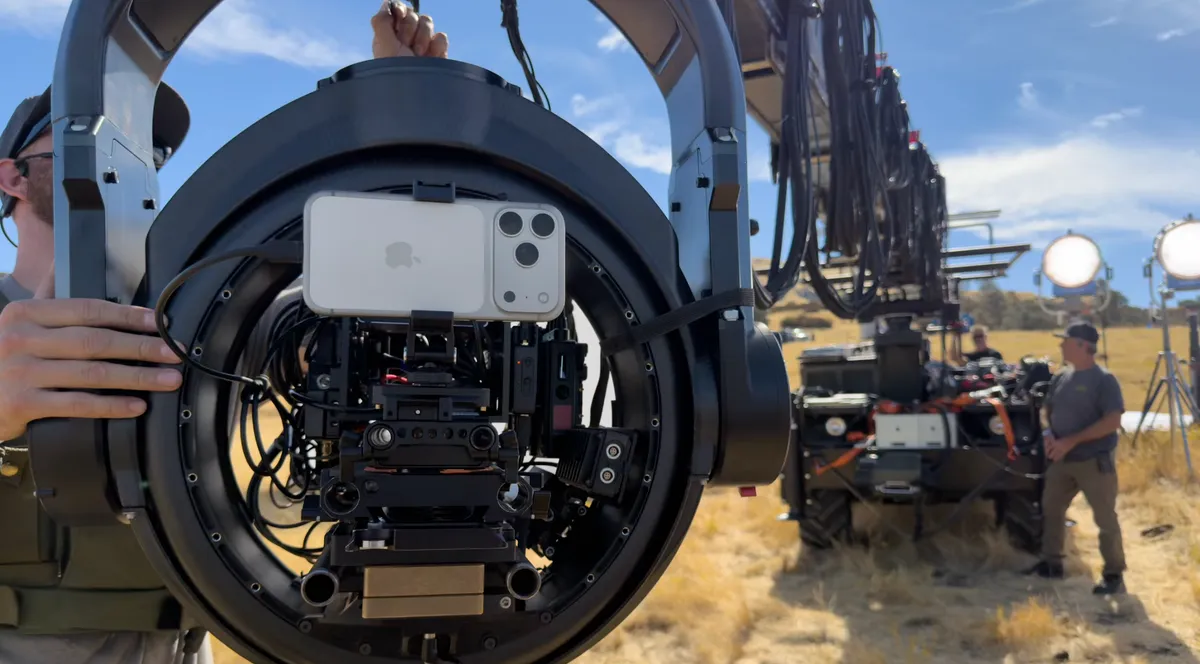
Apple loves to showcase cinematic footage with the tagline “Shot on iPhone.” And to be fair, that’s not a lie. But what most people don’t see is what it actually takes to get those images: shooting to external drives for ProRes, custom rigs to add better glass, and some of the best cinematographers in the world building the lighting.
That’s not an iPhone replacing a camera, that’s a camera crew using an iPhone. So yes, your phone can be an excellent tool. But it’s not replacing real cameras anytime soon.
Upgradability Matters
One of the most important things to consider when investing in gear is upgradability.
Technology moves fast. A camera isn’t something you buy once and use for the next 20 years. You’re constantly upgrading lenses, microphones, gimbals, and every three to five years, the camera body itself.
This is one reason sticking with your phone makes sense early on: it naturally upgrades over time.
So who actually benefits from stepping into a camera system and specifically something like the Sony ZV-E10?
1. Businesses and professionals upgrading their content
At this point, every business should be creating content. I genuinely can’t think of one that wouldn’t benefit.
Plumbers. Financial advisors. Law firms.
You think t-shirt companies and influencers are the only ones who need content?
And when I say upgrade, I mean that intentionally. Plenty of businesses are absolutely crushing it with phones. But when you want more control, more consistency, and a more polished look, a camera like this starts to make sense.
👉 For businesses moving beyond phone-only content, this is exactly the kind of setup I plan around. If you’re curious how that translates into real deliverables, my pricing breakdown is here.
2. Me, fifteen years ago
I had no idea what I was doing. I didn’t know what kind of content I wanted to make.
This camera lets you explore. You’re shooting 4K video. You can take professional photos. You can livestream. You’re learning lighting, audio, framing, all of it.
In those early years, you’re doing everything.
You’re also probably becoming the weirdo who always has a camera.
The ZV-E10 is small enough to take with you and shoot somewhat inconspicuously. I used to bring a massive DSLR to restaurants and leave it sitting on the table — incredibly awkward for everyone involved, especially my date. And then the food would come, and I’d start moving around the table looking for the best light.
If I’d had this camera back then, I could’ve just pulled it out of my pocket and grabbed the shot.
At around $1,100, you’re getting a real interchangeable-lens camera with a large APS-C sensor, solid video specs, and access to Sony’s entire E-mount lens ecosystem.
That last part matters more than most people realize.
When someone buys their first camera, they’re not just buying a body, they’re buying into a system. With the ZV-E10, you can start simple and scale over time without throwing everything away.
I have no idea where that old JVC camcorder is now. But if I’d started with something like the ZV-E10, I’d probably still be using pieces of that original system — a lens, or even the camera itself in certain situations.
Finally, Sony clearly designed this camera for newbies and content creators. The flip-out screen, the hot shoe, the quick photo/video switch — all of it makes day-to-day content creation easier, especially if you’re filming yourself.
For most people, this camera represents a massive step up from a phone without feeling overwhelming or overly technical.
What I Love About This Camera
Before getting into why I don’t personally rely on the ZV-E10, it’s important to be clear about why I recommend it so often. This camera does a lot of things extremely well — especially for a first camera.
Small, Light, and Easy to Actually Carry
The ZV-E10 weighs just under 12 ounces (about 343 grams) for the body. That’s incredibly light for an interchangeable-lens camera.
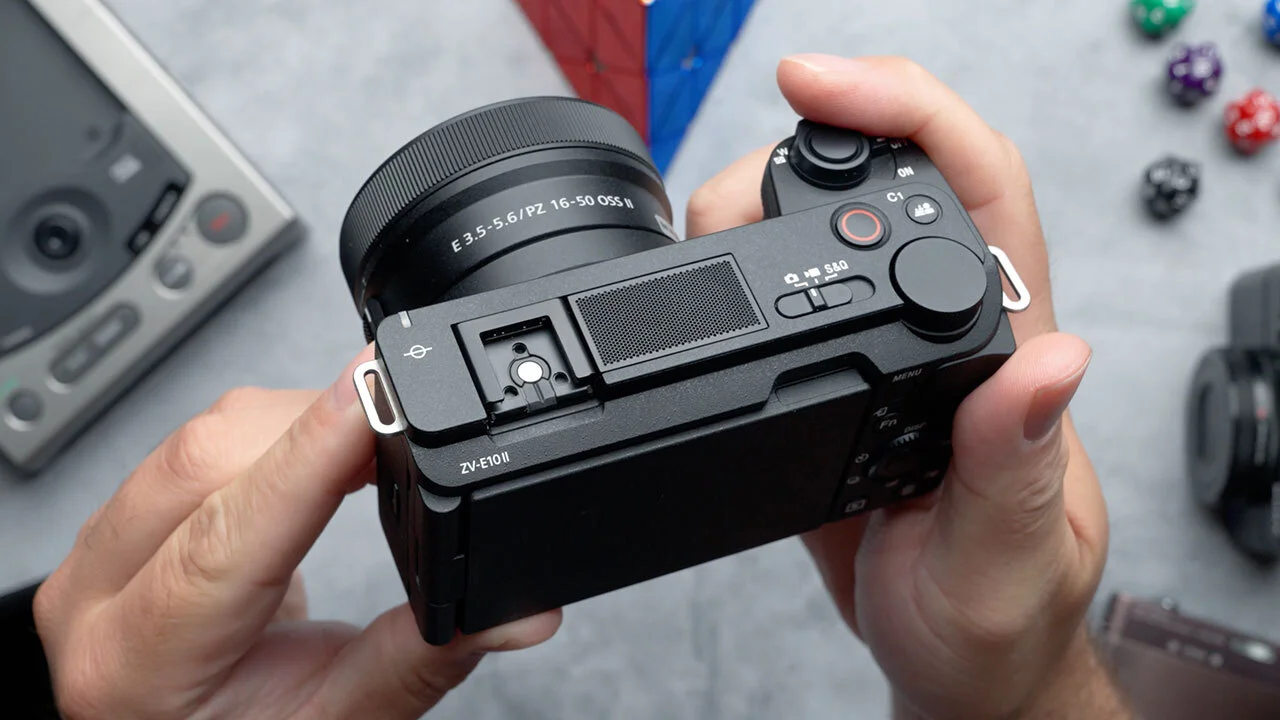
In real life, that means it’s easy to travel with, easy to carry all day, and easy to pull out quickly when something happens. It fits comfortably in a small bag, sling, or even a jacket pocket depending on the lens.
That matters more than people think. A camera you’re willing to carry is a camera you’ll actually use. I’ve owned plenty of cameras that were technically better but stayed home because they were bulky or annoying. This one doesn’t feel like work to bring along.
For travel, family outings, or everyday life, that weight difference adds up fast.
Photography That’s More Than Good Enough
The ZV-E10 shoots 24-megapixel photos, which is a really smart resolution for a camera like this.
You don’t need 40, 50, or 60 megapixels to take great photos. At 24 megapixels, you can:
Print large photos
Crop comfortably
Deliver professional-quality images
Use photos across websites, marketing materials, and social media
Most images people see are viewed on phones or screens at a fraction of that resolution. More megapixels usually just mean larger files, slower editing, and more storage — not better photos.
On top of that, the ZV-E10 can shoot RAW, which is a huge step up from a phone. RAW files give you flexibility to recover highlights, lift shadows, adjust white balance properly, and dial in a look without the image falling apart.
Paired with a decent lens, this camera is excellent for:
Portraits
Lifestyle and environmental photos
Product photography
Travel and everyday shooting
Business and marketing images
👉 You can see how I use cameras like this in real-world scenarios in my photography portfolio.
Fast Enough for Real Life (Yes, Including Kids’ Sports)
This camera can shoot up to 11 frames per second in burst mode with continuous autofocus. That’s fast enough for most real-world action.
Is it a pro sports camera? No.
Is it absolutely good enough for your kid’s soccer game? Yes.
That burst speed gives you multiple frames through moments like:
A kick on goal
A sprint down the field
A jump or celebration
Combined with Sony’s autofocus, it does a solid job keeping moving subjects in focus as long as you’re shooting in decent light and using the right autofocus mode.
For family sports, school events, dogs running around, playgrounds, and everyday action, this camera performs really well.
Video Versatility That Punches Above Its Weight
Video is where the ZV-E10 really stands out.
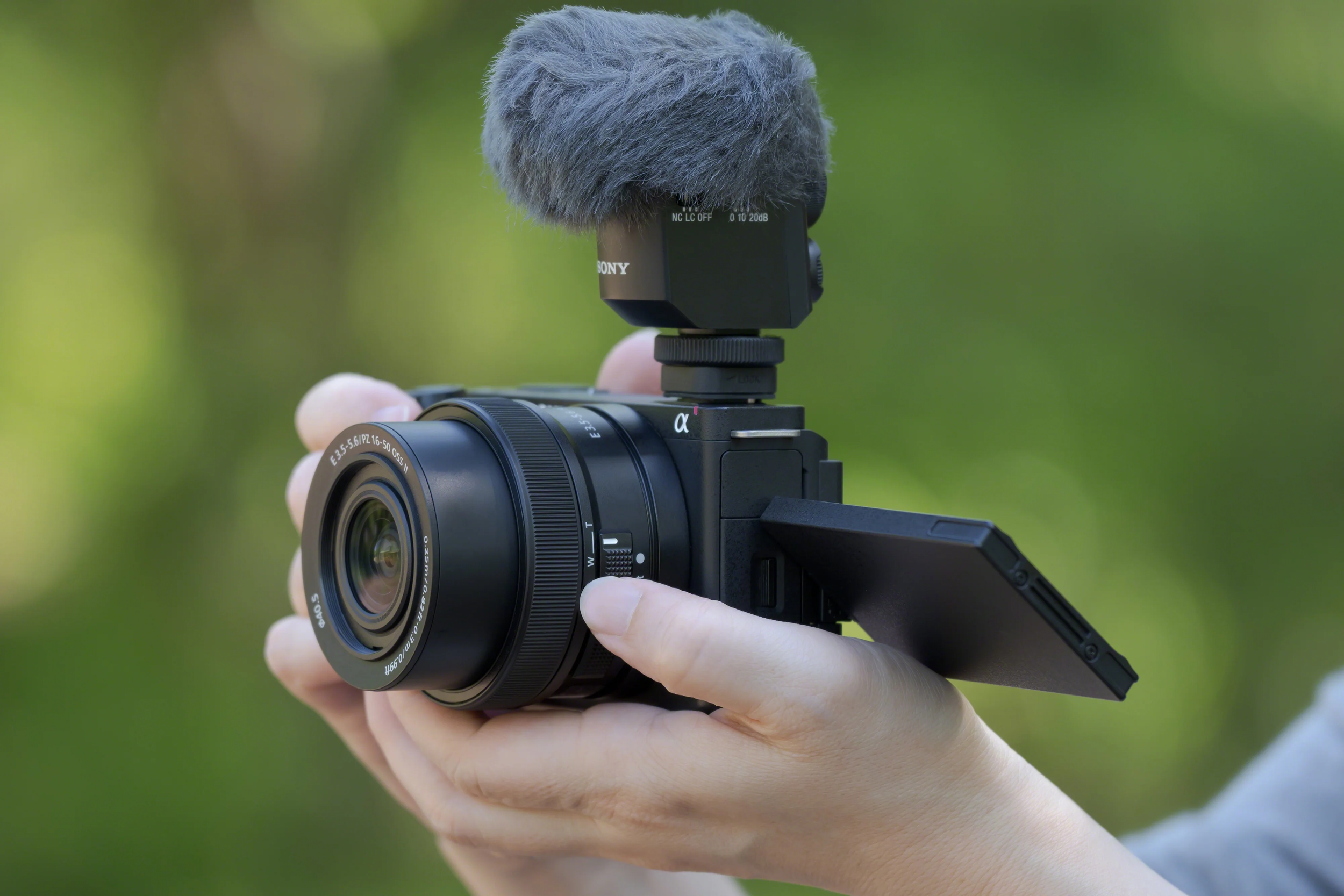
Being able to shoot 4K up to 60 frames per second at this price is incredible. That gives you flexibility — smoother motion, light slow-motion options, and footage that will hold up for years.
It can also shoot vertical video natively, which matters if you’re creating content for social platforms. You’re not fighting the camera or cropping awkwardly in post — you’re shooting for the platform you’re posting to.
If you want to learn color grading, the camera offers S-Log, which gives you room to grow as your skills improve. You don’t have to use it right away, but it’s there when you’re ready.
Built for Creators, Not Just Photographers
Sony clearly designed this camera for people who actually make content.
The flip-out screen is huge if you film yourself. You can see framing, focus, and exposure without guessing. Once you’ve used a flip-out screen, it’s very hard to go back.
The hot shoe makes adding a microphone simple. Audio matters more than most people realize, and this camera makes good audio easy without building a complicated rig.
It also works extremely well as a streaming or webcam camera, making it a great option for podcasts, teaching, live streams, and online content.
👉 A lot of the long-form and short-form video work I produce relies on this same kind of flexibility.
Why All of This Matters for a First Camera
What I love most about the ZV-E10 is that it doesn’t lock you into one type of shooting.
You can:
Take high-quality photos
Shoot cinematic video
Capture action
Create vertical content
Livestream
Learn advanced features over time
It’s small enough to carry, capable enough to grow with you, and flexible enough to handle almost anything you want to try.
For a lot of people, this won’t just be their first camera — it’ll be the camera they learn on, experiment with, and keep using long after they stop thinking of themselves as beginners.
And that’s exactly what a first camera should do.
Why I Don’t Use This Camera
So why don’t I use this camera?
That’s actually a slightly misleading question.
The truth is simply that there are better cameras, of course there are. What matters more is why they’re better, because those differences explain the limitations of most entry-level cameras.
These aren’t flaws. They’re trade-offs. And for most people, you’ll never need the upgrades I’m about to talk about. The ZV-E10 will do everything you need it to do.
Full Frame vs. APS-C: Why Sensor Size Matters
Mirrorless cameras generally come in two sensor sizes: full frame (more expensive) and APS-C (more affordable).
At a basic level, the difference is simple: full-frame sensors are physically larger than APS-C sensors.
That difference affects a few important things.
Field of View (The Crop Factor)
APS-C sensors capture a smaller portion of the image coming through the lens. Because of that, the image appears “cropped.”
Most APS-C cameras, including the ZV-E10, have about a 1.5x crop factor. That means:
Nothing about the lens itself changes — you’re just seeing less of the scene.
For everyday content, this isn’t a big deal. But for wide landscapes or anything where scale matters, that extra width from full frame becomes noticeable.
Low-Light Performance
Larger sensors generally handle low light better.
Because full-frame sensors collect more light, they tend to produce:
Less noise
Cleaner shadows
More usable detail in dark scenes
APS-C cameras aren’t bad in low light, they’re just less forgiving. O what the hell am I saying, most APS-C are bad in low light in my opinion. I’ve been ruined by the Sony A7S III. Which big time nature documentaries use to shoot animals at night.
Depth of Field and “Look”
Full-frame cameras make it easier to achieve shallow depth of field — the blurred background look people associate with cinematic images.
You can absolutely get background blur on APS-C, especially with fast lenses, but full frame makes it easier.
Size, Weight, and Cost
APS-C cameras exist for a reason.
Smaller sensors allow for:
Smaller camera bodies
Smaller, lighter lenses
Lower overall cost
That’s why cameras like the ZV-E10 make so much sense as a first camera.
Stabilization: IBIS vs. Optical Stabilization
When people talk about stabilization, they’re usually referring to one of two things: IBIS or optical stabilization.
IBIS (in-body image stabilization) means the camera itself stabilizes the image by physically moving the sensor. This makes handheld footage more forgiving and works with any lens.
Optical stabilization lives inside the lens. Sony calls this OSS (Optical SteadyShot). If your lens isn’t stabilized, you get no stabilization at all.
The ZV-E10 relies on optical stabilization, not IBIS.
Why Sony Left IBIS Out
This isn’t because of the APS-C sensor — there are APS-C cameras with IBIS, even in Sony’s lineup.
It comes down to design trade-offs:
IBIS adds cost
It requires more physical space
It increases complexity
Sony positioned the ZV-E10 as an entry-level creator camera. Leaving IBIS out helps keep it affordable, compact, and clearly separated from higher-end models.
For most creators, stabilization comes from tripods, desks, gimbals, or stabilized lenses — and in those scenarios, IBIS matters far less.
Why This Should Be Your First Camera
If you strip everything back, the reason I keep recommending the Sony ZV-E10 is simple: it makes starting easy, and growing possible.
It’s small enough that you’ll actually carry it. Light enough that it won’t feel like a burden. Capable enough that you won’t outgrow it the moment you start taking things seriously.
It takes great photos. It shoots excellent video. It handles action better than most people expect. It works for vertical content, long-form video, live streaming, and everyday life. And it does all of that without forcing you into a complicated or intimidating workflow.
This camera meets you where you are.
If you’re coming from a phone, it gives you real control and real image quality without overwhelming you. If you’re learning, it gives you room to experiment. If you’re building something — a business, a channel, a creative habit — it gives you a tool that grows alongside you instead of getting in the way.
Most importantly, it encourages you to actually use it.
The best first camera isn’t the one with the most features or the best specs. It’s the one you’ll take with you, turn on, and learn with. It’s the camera that helps you make more things, not the one that makes you think about gear.
That’s what the Sony ZV-E10 does well.
If you’re looking for a first camera that’s versatile, approachable, and genuinely enjoyable to use, this is an easy place to start.
And starting is the whole point.
👉 If you’re thinking about upgrading your content this year and want to see what working together looks like, you can check out my retainers here.
Frequently Asked Questions
Is the Sony ZV-E10 a good first camera?
Yes. It’s small, affordable, easy to use, and capable enough to grow with you. If you’re upgrading from a phone and want better photo and video quality without feeling overwhelmed, it’s one of the best first cameras you can buy.
Is the Sony ZV-E10 good for beginners?
Absolutely. The autofocus is reliable, the menus are approachable, and features like the flip-out screen make it much easier to learn. You can keep things simple at first and unlock more advanced tools over time.
Is the Sony ZV-E10 good for photography or just video?
It’s good at both. The ZV-E10 shoots 24-megapixel RAW photos that are more than enough for portraits, lifestyle, product, and business photography, while also offering strong video features.
Can the Sony ZV-E10 shoot sports or action?
Yes — within reason. It shoots up to 11 frames per second with continuous autofocus, which is more than enough for kids’ sports, school events, pets, and everyday action.
Is the Sony ZV-E10 better than a phone camera?
For control, consistency, and long-term flexibility — yes. Phones are great tools, but a camera like the ZV-E10 gives you interchangeable lenses, RAW photos, real video controls, and more room to grow as your skills improve.
How long will the Sony ZV-E10 last before I need to upgrade?
For most people, several years. You’ll likely outgrow your skills before you outgrow the camera. And even when you do upgrade, lenses and accessories carry over, so nothing is wasted.
