How I Actually Make Money as a Creator (And How Brand Deals Really Work)

Ever wonder how brand partnerships actually work? You’re scrolling through Instagram and see a sponsored post. Your favorite YouTuber opens their video with, “This video is brought to you by Squarespace.”
Ah yes — the rise of the creator. And with it, the creator industry. There’s no other way to put it. You’ve probably heard stories of creators getting paid huge fees for what looks like very little work. And sure, if your last name is Kardashian, maybe that’s true. But for the average creator? Not even close.
There are millions of “average creators” out there — normal people making a living in the creator economy. And it’s a real job. A real skillset. A real hustle.
This whole field started around the time I was getting into photography and video. I didn’t know where it was headed, but I decided to dip a toe in and start a YouTube channel. Today it has around 40,000 subscribers — still a relatively small channel — but it’s created opportunities. And as a freelance videographer, it’s a great side stream to lean on when business slows.
In this article, I want to peel the curtain back on how I actually make money from content creation. If you’re a freelance creative, you should always be looking for multiple ways to generate revenue. The more buckets you have, the more stable your business becomes. Clients come and go. Work has seasons. But if you can build something that fuels your passion, supports your business, and brings in consistent revenue? That’s how you build freedom.
Choosing a Platform That Supports Your Business
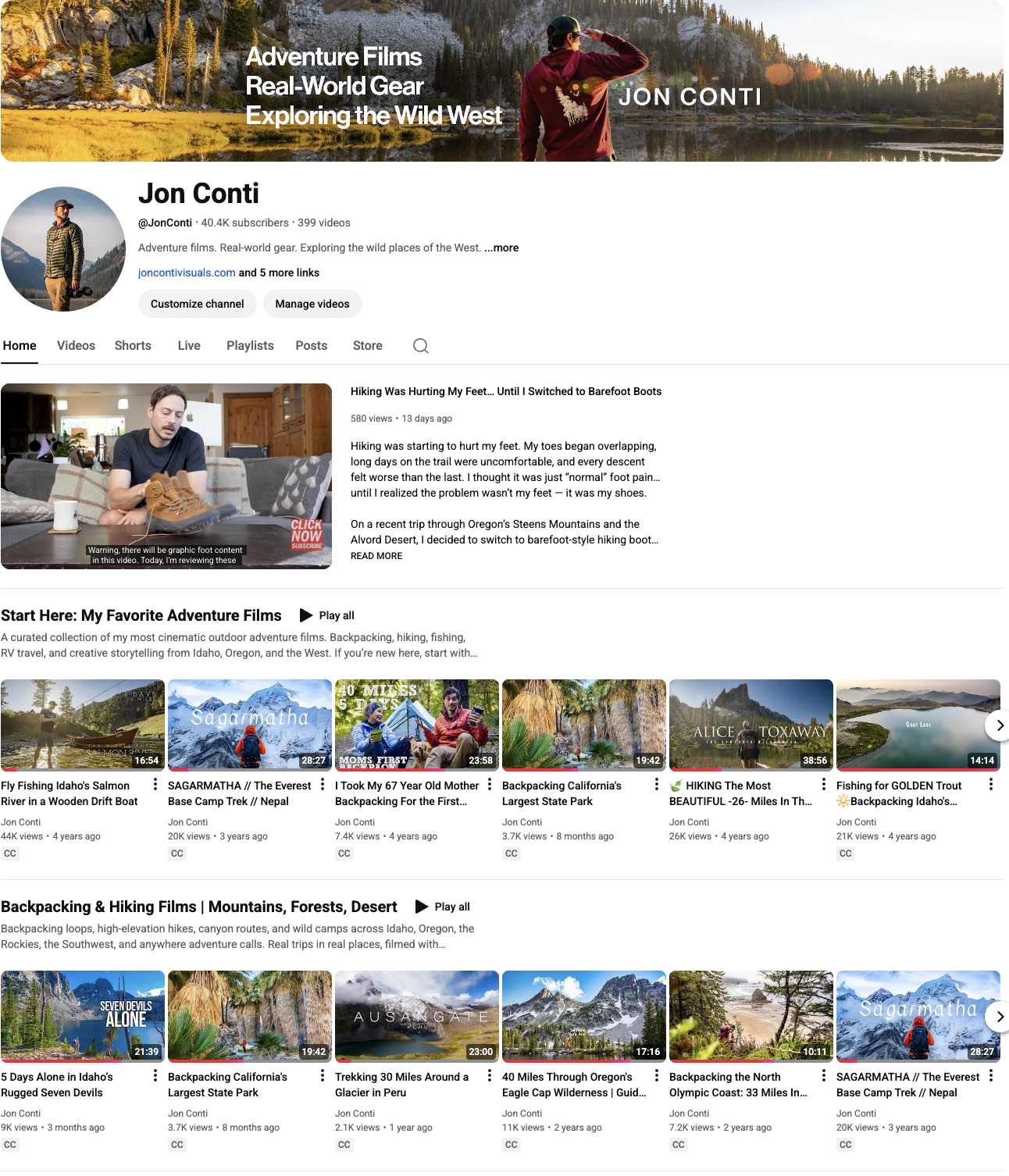
Before you ever get a brand deal or make a dollar online, you have to decide where your content is going to live. For me, the choice was easy. I’m a videographer. I make films for my clients, I shoot long trips, I tell stories visually. So YouTube was the platform that made the most sense. It was simply the platform that lined up with the work I already do every single day.
YouTube is long-form, it’s search-based, it values storytelling. A YouTube video acts as a piece of marketing for me. It’s a portfolio, it drives people to my website, it shows potential clients how I shoot, how I think, and the type of environments I’m comfortable working in.
And honestly, it’s one of the reasons I’ve landed certain clients. They see a video, they like the way it feels, and suddenly they want something similar. I’ve gotten emails that literally start with, “I saw your YouTube video on ____.”
I know photographers who’ve made a thing out of Instagram. They have no interest in long-form video. So Instagram is where their work makes sense. Their images look good there. Their audience lives there. It fits their medium, it fits their business, and because of that, it ends up being a natural extension of what they already do.
That’s really the point here. Your platform should support your core business, and vice versa. Very, very, very few people instantly go viral and get paid big money. The reality is, like any other business, it’s a diligent grind that’s rewarded with steady growth.
When you choose the right platform, everything starts working together. Your client work helps your channel. Your channel sends new clients to your website. Your website reinforces your credibility. And suddenly you’ve built this little loop where everything feeds everything else. That’s when your platform stops feeling like a hobby. That’s when it starts helping you make a living.
Don’t worry, I’ll give you some real world examples in a second.
Growing the Channel (Slowly, Patiently, and With a Lot of Learning)
You don’t get brand deals right away. Not even close. Growing a channel is slow, and in the beginning it feels like you’re talking to yourself. When I first started posting to YouTube, I was getting tens of subscribers at a time and a few hundred views here and there. Some videos had sixty-something views on them. It was slow. Painfully slow at times.
But it also did something important — it taught me how to make better content. Every upload was feedback. What people watched, where they dropped off, which topics landed, which ones didn’t, what thumbnails worked, what titles didn’t. You learn all of that by doing it. And honestly, that learning process has helped me just as much in my client work as it has on YouTube. The more I understood online storytelling, the more value I could bring to my actual business.
Back in those early days, I was shooting a web series for Visit Idaho called Epic Idaho. We were traveling all over the state capturing documentary-style adventures, and the best part was that I owned the footage. That gave me something to work with. I took all those trips, broke the episodes into segments, added behind-the-scenes moments, and started posting consistently.
Eventually, after enough uploads, we crossed the threshold to join the YouTube Partner Program. For the record, the requirement is 1,000 subscribers and 4,000 hours of watch time over the last 12 months. Hitting 1,000 subs isn’t the hard part — it’s the watch time. By the time we finally hit 4,000 hours, we were around 1,500 subscribers.
Once you join the Partner Program, you technically start “making money,” but it’s very minimal. YouTube pays roughly six cents per thousand views, depending on the topic. It’s not a paycheck. It’s coffee money. So to keep the momentum going, I layered in affiliate links. Amazon paid me about four percent of every purchase made through my links. REI paid five percent. Funny enough, those affiliate earnings have consistently made me more than the Partner Program ever has.
Then I started getting creative on the business side. I pitched more web series to travel organizations I already had relationships with. McCall was one of the first — they hired us to make a six-episode series. Then the North Idaho Travel Alliance brought me up for a two-week winter trip, which created another round of videos, photos, and stories. Client work fed the channel. The channel fed the business. And slowly, it all began to snowball.
That’s the truth of those early days. There were no shortcuts, no viral hacks, no overnight success. Just consistent output, learning what works, repurposing the work I was already doing, and letting everything build on itself. All of that foundation had to be in place before any brand partnership even made sense.
You’ve probably heard the term “evergreen content.” There’s no better place to see the power of evergreen content than on YouTube. Videos get rediscovered all the time. Videos go viral months — even years — after posting. It can take a while, but it’s truly compound interest. I released a video about my backpacking loadout that got a couple thousand views when I first put it out. A few months later it had 10,000 views. Today it has over a million. And that video has affiliate links to all the gear. I have several videos like that. Not hitting a million, but getting little bumps like that. The more I put out, the more monthly views, the more revenue — it all continues to work.
This is what I mean about slow and steady, and I encourage you not to get discouraged but to view the journey as fun. You’ll probably never be MrBeast, but who knows where it’ll go, and I promise you’ll get positive benefits out of it no matter how many subscribers you get.
The Three Ways Creators Make Money (And When Brand Deals Actually Start)
By the time you’re putting out consistent content, you’ll start to see small amounts of money coming in. For me, everything falls into three buckets. The smallest bucket is the YouTube Partner Program. The second is affiliate sales, which actually outperforms YouTube, especially in those early years. And then there’s the third bucket, the one that eventually becomes the most profitable: brand deals.
You’ll start getting “brand deal offers” earlier than you expect. But not the kind you want.
When my channel was still small, the inbox started filling with these random offers from obscure companies overseas. It was the wild west. Honestly, it still kind of is. You’d get messages like, “Hello dear, we want to send you our $7 flashlight in exchange for full YouTube review.” No payment. No rights. No usage. And definitely no alignment with my channel. Just cheap products they wanted promoted for free.
And you’ll always get those. No matter how big your channel gets.
But at a certain point, something shifts. You’ve posted enough content that brands can actually get a sense of who you are. They can see your tone, your style, and your audience. That’s when legitimate companies start paying attention — outdoor brands, gear brands, companies that actually make sense for my space.
And that’s when brand deals become a real revenue stream. Not because you hit a certain subscriber count, but because you built a catalog that brands can understand. A catalog that shows exactly what it would look like if their product was in your world.
So for me, brand deals didn’t start with a giant sponsorship or a big agency coming to me. They started the same way they start for most creators: with a small but real company reaching out and saying, “Hey, we saw your video on ____. Would you want to work together?”
And that’s when the business side of being a creator officially begins.
How Brand Partnerships Actually Start (And Why They Never Tell You the Rate Up Front)
When a real brand deal finally comes your way, the first thing you’ll notice is this: they almost never give you a number. They don’t say, “We’ll pay you $X for a video.” It’s always something vague like, “Hey, we’d love to work together.” At best you’ll be asked your rates.
And this is where creators usually freeze, because how do you know what the “right” number is? What’s market value? What’s too much? What’s too little? When I first started doing these deals, I had no idea either. It felt like trying to price a project in an industry with no price tags.
Back in the early days of YouTube, it was truly the wild west. You’d get “offers” from companies you’ve never heard of — no budget, no structure, no clarity. The creator economy was still forming. Today it’s better, but it’s still messy.
This is where AI has actually become one of the best tools creators have. Tools like ChatGPT can scan forums, agency blogs, creator discussion boards, rate charts, and industry data. When you ask it what you should charge based on your:
niche
channel size
average views
engagement
deliverables
usage rights
platforms
…it will give you a pretty solid industry-range number. And in my experience, those numbers are close enough that brands don’t balk. They might counter (and they usually do), but that’s normal. That’s literally the agency’s job.
Which brings me to another thing most people don’t know: most brand deals aren’t handled by the brand directly.
When you get an email from “someone at ___ brand,” there’s a good chance that’s not the brand at all — it’s an agency or affiliate partner managing the entire creator program.
Here’s how the pipeline usually works:
A brand says, “We want 20 creators promoting this shoe.” They give an agency a budget. The agency is responsible for finding the creators, negotiating rates, managing deliverables, handling contracts, tracking performance, and justifying that budget to the brand.
So when you’re emailing back and forth, you’re almost always talking to a contractor, not the brand itself. They’re managing dozens, sometimes hundreds of creators at the same time. You’re just one piece of a big spreadsheet.
This is important to understand because it changes your expectations. If they’re slow to reply, it’s not personal. If their offer feels low at first, it’s because they’re trying to stretch the budget. If they counter you, it’s because they’re supposed to.
Once you understand that, brand deals stop feeling chaotic or personal, and start feeling like what they actually are: a normal business negotiation inside a growing industry.
The creator economy has matured enough that there’s structure now — agencies, budgets, metrics, expected deliverables — but it’s still flexible enough that creators have room to negotiate fair compensation based on their value.
And that’s the key word: value. Not subscribers. Not follower count. Value.
That’s what you’re actually negotiating.
Let me show you what I mean.
Breaking Down a Real Brand Partnership: Vivobarefoot

To make all of this concrete, here’s exactly how my Vivobarefoot partnership came together — real numbers included. Creators rarely talk openly about this stuff, but I think it helps both sides understand how the industry actually works.
Vivobarefoot is a footwear company built around one core idea: “The closer your feet are to the earth, the healthier you move.” They design shoes with wide toe boxes, zero-drop soles, and minimal cushioning so your foot can move naturally. More balance, more ground-feel, more mobility. They market toward people who care about natural movement, outdoor connection, sustainability, and functional design. In other words, the type of audience that already watches my channel.
Vivobarefoot reached out the same way most legitimate brands do: a short email saying they liked my content and wanted to work together. No rate attached, no suggested number — just a simple, “What are your rates?” And of course, it wasn’t even Vivobarefoot directly — it was an agency in Austin, Texas working on behalf of Vivobarefoot.
That’s where the negotiation begins.
Early in my creator journey, the question of rates felt like guessing. But over time I’ve built a structure I’m confident in.
Here’s what I quoted them:
$1,500 — Dedicated YouTube review video
$800 — YouTube call-out/integration at the start of a longer adventure film
$400 — Ten raw 4K clips
$400 — Ten edited still photos
$200 — Vertical reel
Unlimited usage rights included
Product included
This is where the synergy with my main profession really kicks in. Most creators only offer outward-facing content — a post, a reel, a sponsorship mention. But brands almost always need more than that. They need internal-use B-roll, vertical assets, high-quality product photos, lifestyle images, clean commercial shots for ads and emails.
Most YouTubers can’t provide that. I can, because videography and photography are my actual business.
By building a YouTube channel that works in harmony with my profession, I’m able to offer brands deliverables a typical creator simply can’t. I don’t have to pretend to be a videographer for the sake of a brand deal — I am one. And that lets me approach these deals with a lot more flexibility and value.
Vivobarefoot didn’t just want the review on my channel. They wanted assets they could use across their entire marketing ecosystem. So we negotiated, they countered (like agencies always do), and we settled on $1,800 total for the review video, ten B-roll clips, five edited photos, and a vertical reel.
And here’s the part creators overlook: this deal didn’t just produce one sponsored video. It produced two full pieces of content for my channel — the review video and a separate adventure film I made on the same trip. Both videos will continue to generate views. Both contain affiliate links. Both help new people discover my channel and eventually my business. Both strengthen my portfolio and online presence. And now this entire blog exists because of that same shoot.
One brand deal. Multiple layers of value — for them and for me.
And that’s really what I mean when I talk about value over subscribers. Brands aren’t paying for a number on a screen. They’re paying for the quality of what you can produce, the environment you can put their product in, and your ability to deliver assets they can actually use.
That’s the real value brands are buying.
A Completely Different Kind of Brand Deal: Suunto (And the Art of Creative Business Operation)
Vivobarefoot was a kind of “best case scenario” brand deal. Paid, aligned, clean deliverables, and tons of synergy with my profession. But not every brand deal looks like that. Some take more creativity, more negotiation, and honestly more business sense.
This is where being a creator and being a creative business operator go hand in hand.
I do quite a few brand deals with an e-bike company. They don’t pay me in cash, but they send me e-bikes worth anywhere from $1,800 to $2,700. That’s real value. They give me a 10% affiliate link too, but I’m not sure I’ve ever made any meaningful money through it. What I do get are high-value products I can use, review, feature in trips with Mikelle, and if I want, resell the extras — usually for around my standard YouTube rate of $1,500.
Then there’s Zenbivy. They make high-end modular sleep systems: quilts, sheets, pads, pillows, and camping sleep gear designed to feel more like an actual bed in the backcountry. They focus heavily on comfort, customization, and warmth without weight. And their gear isn’t cheap. A full Zenbivy setup can easily run several hundred dollars.
They don’t pay me either. But they also don’t ask for anything specific. They just send me gear. Expensive gear. Gear I can use on trips, in videos, or even sell if I want. That’s another form of value.
Not every deal has to be cash to be good, if the alignment is right and the gear actually supports the content I make.
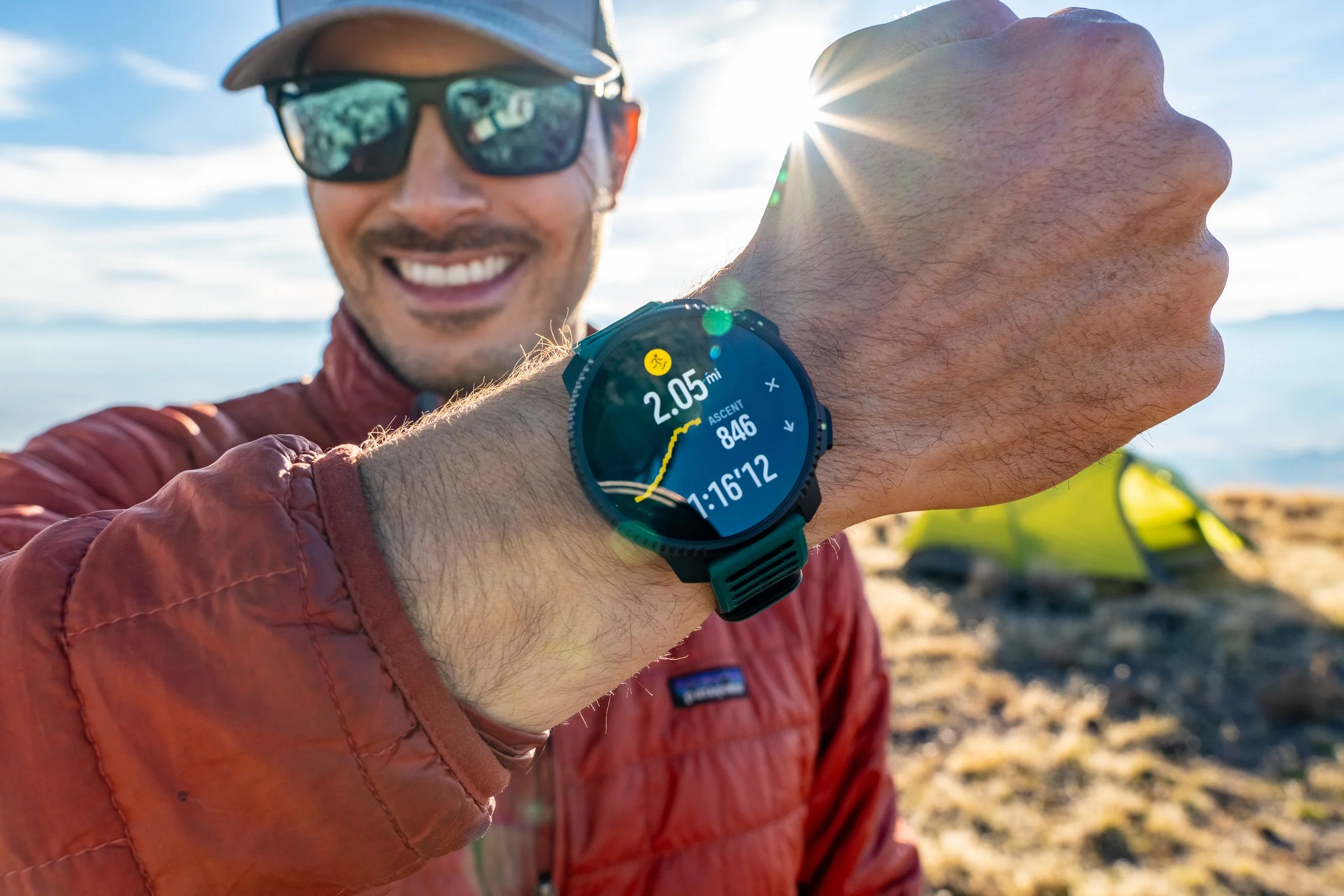
But the partnership I really want to break down is Suunto, because this one shows the other half of brand deals: contracts, negotiation, red flags, timeline issues, and how important it is to protect yourself.
First, a bit about Suunto. They’re a Finnish company known for producing high-quality GPS watches, altimeters, compasses, dive computers, and outdoor navigation instruments. They’re respected in the outdoor world — durable gear built for rugged environments. So the alignment made sense for me.
The approach was exactly the same as Vivobarefoot. Not Suunto directly, but an agency running a Black Friday campaign on their behalf.
I sent them my standard rates. They asked if they could get the $800 call-out for $500. I agreed because they were sending me a very cool $600 watch and when the alignment is right, I’m willing to bend.
Then came the contract. This is where creators get burned if they aren’t careful.
It is crucial to read every contract word for word, and it is absolutely worth using AI to break down the contract in plain language. Let the AI flag the weird parts — unlimited edits, absurd deadlines, unusual usage rights, exclusivity traps, creative control hand-offs, things written for creators in other countries with very different workflows.
And don’t bend here. This is where you protect yourself.
Suunto’s first contract asked for a five-day turnaround time. Five days! Some creators with phone setups who review products at their desks can do that. I can’t. My whole thing — my differentiator — is that I take products into real wilderness and test them. And sometimes that includes bad weather, long drives, multiple shoot days, and challenging environments.
So I politely refused the contract and passed on the campaign. I figured because it was tied to Black Friday there was no way I could deliver something real in time.
They asked why I backed out. I told them. They said it was fine if my video wasn’t part of the Black Friday promotion. I gave them a new timeline and said if they could agree to it, I’d take on the project.
They agreed and then sent me a contract with the wrong timeline. So I politely refused again. I laid out all my terms clearly. They revised the contract. I signed.
And guess what? A week later they asked if I could get the video done before Black Friday anyway.
Luckily I had a contract with my terms clearly stated. I simply referred them back to the agreement, and that settled it. Nothing malicious — they were just juggling dozens of creators and lost track of my terms. Once I reminded them, the entire project went smoothly.
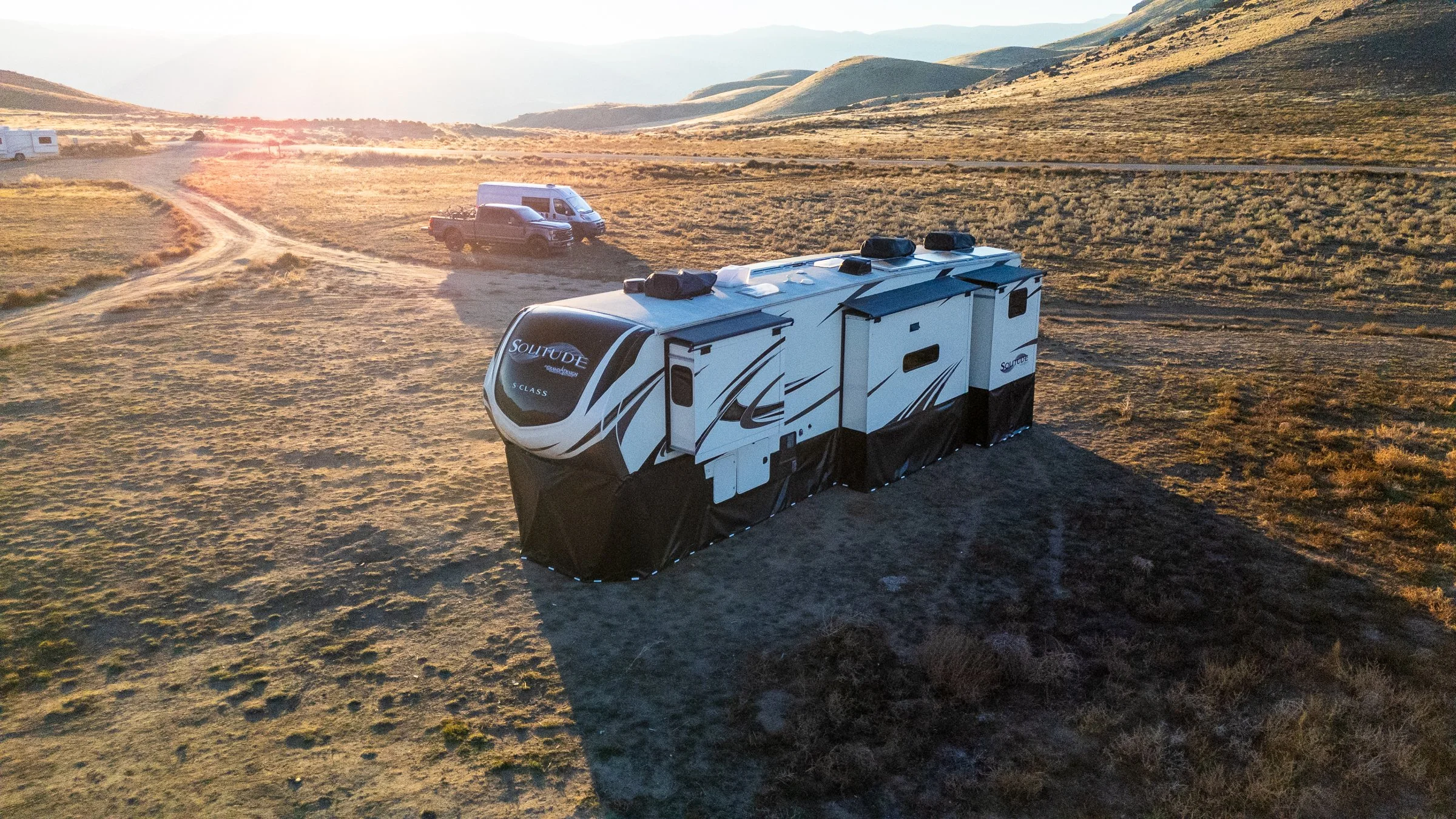
Right around the time the Suunto shoot was lined up, I got a call from someone in Connecticut about drone footage for their product — an RV skirt — and guess how they found me? YouTube.
They had a shoot planned in the Owyhees over a weekend. I saw an opportunity.
I stacked the shoots together and maximized everything.
I drove my RV out Friday night. The RV skirt shoot was Sunday morning, but I met the main photographer Saturday to go over everything. After that, I shot my Suunto day-hike content in the Owyhees. Came back and shot the RV skirt that evening. Slept in the RV. Woke up Sunday, shot the skirt again in the morning light, then went backpacking and shot the watch footage in the afternoon.
By Monday morning I was back home with:
the drone footage I needed (in fact, more than promised since I shot Saturday and Sunday)
all the content Suunto required
a watch I was excited to keep using
a second paid commercial client
and two full personal days of outdoor adventure for myself
This is what I mean by thinking creatively. Stacking shoots, aligning opportunities, staying flexible, and using your platform to feed your business — and your business to feed your platform.
Not every brand deal pays you cash. Not every deal works the same way. Not every contract is clean on the first try. But if you know how to operate creatively, and you keep your business aligned with your content, every partnership can be leveraged into something bigger.
Final Thoughts: Build a System That Works for You
If there’s one thing I hope you take away from all of this, it’s that there’s no single “correct” way to make money as a creator. There’s no blueprint, no formula, no perfect strategy. What there is, is alignment.
When your content aligns with your profession…
when your trips align with your deliverables…
when your brand partnerships align with your values…
when your platforms align with your strengths…
…everything starts working together instead of competing for your time and energy.
That’s really the magic. And it’s not flashy. It’s not overnight. It’s not viral.
It’s steady. It’s intentional. It’s sustainable.
The creator world can seem chaotic from the outside — wild west rates, inconsistent opportunities, algorithms you can’t control. But if you zoom out, the thing that matters most is how well you integrate your creator identity with your actual business.
My YouTube channel sends clients my way. My client work feeds my YouTube channel. Brand deals support my trips. My trips create content. That content becomes evergreen. The evergreen content becomes revenue. The revenue buys more time to create. And everything loops.
That’s the part people don’t see. It’s also the part that makes this whole thing possible.
If you’re a creator reading this: build something that supports the work you already do. Don’t chase platforms, chase alignment. Don’t chase virality, chase longevity. Give yourself room to experiment, to learn, to improve.
If you’re a brand reading this: trust the creators who bring real value, not just big follower counts. The ones who shoot in real environments. The ones who understand your audience because they live in those spaces. And the ones who can create assets you can actually use.
And if you’re someone sitting in the middle trying to figure it all out — welcome to the club. None of us start with a roadmap. We build it as we go.
Thanks for reading, and I hope this gave you a clearer look behind the curtain. Now, time to go make something new.
Explore More from Jon Conti Visuals
If you enjoyed this behind-the-scenes look at how brand partnerships work, here are a few places to dive deeper into my work and process:
Check out my [Video Portfolio] to see the type of adventure films, tourism projects, and commercial work I produce for clients.
Explore my [Photo Portfolio] for outdoor, lifestyle, drone, and commercial photography.
See how I approach aerial filmmaking on my [Drone Services] page.
Learn more about who I am and how I work on my [About Me] page.
If you're a business looking for consistent monthly content, visit my [Video Retainers] page.
See my rates, day-rate structure, and package options on the [Pricing] page.
And if you want to collaborate or book a project, you can reach me anytime through my [Contact Me] page.
FAQ: How Brand Partnerships Really Work (For Creators & Businesses)
How do creators actually make money?
Most creators earn income through a mix of YouTube ad revenue, affiliate commissions, brand deals, and — if they’re also professionals — client work. For me, the biggest revenue buckets are affiliate sales and brand deals, with YouTube ads being the smallest piece.
When do brand deals start happening?
Usually once your content becomes consistent and targeted. Brands care more about alignment and content quality than follower count. I started getting real brand deal offers around 1,500–2,000 subscribers.
Do brands ever send their rates first?
Almost never. The majority of legitimate brands (or their agencies) will ask you for your rates first. This is normal — it’s simply the starting point for negotiation.
How do I know what to charge for a brand deal?
Use AI tools, rate calculators, and industry benchmarks. Your value depends on your niche, quality, deliverables, usage rights, and influence — not just your subscriber count.
Do creators really need to read contracts closely?
Yes. Brand contracts vary wildly and are written for creators across different countries and workflows. Always read your contract line by line — or use AI to summarize and flag issues — and negotiate anything that doesn’t fit your process.
Do you always need to get paid in cash?
Not necessarily. Some partnerships provide high-value products that support your content (e-bikes, sleep systems, gear for upcoming trips). If the product is valuable and aligned with your business, it can be worth more than a small cash payment.
Why do brands use agencies for creator partnerships?
Because brands don’t have time to manage dozens of creators. Agencies handle outreach, negotiation, contracts, deliverables, reporting, and deadlines. When you email with “someone from the brand,” it’s almost always an agency representative.
Is it smart to stack shoots or combine projects?
Absolutely. When your platform aligns with your profession, you can combine trips, brand deals, and client work into efficient field days. That’s how you maximize revenue, save time, and get more content.
How important is platform choice for creators?
Critical. Your platform should support your business. I use YouTube because I’m a videographer. Photographers might choose Instagram. Writers might choose a blog. Pick the platform that naturally complements the work you already do.
What’s the most important part of long-term success as a creator?
Building a system where everything works together — your content, your business, your trips, your brand deals, your portfolio, your audience growth. When everything feeds everything else, you become sustainable.
